3 min
6 Jul 26
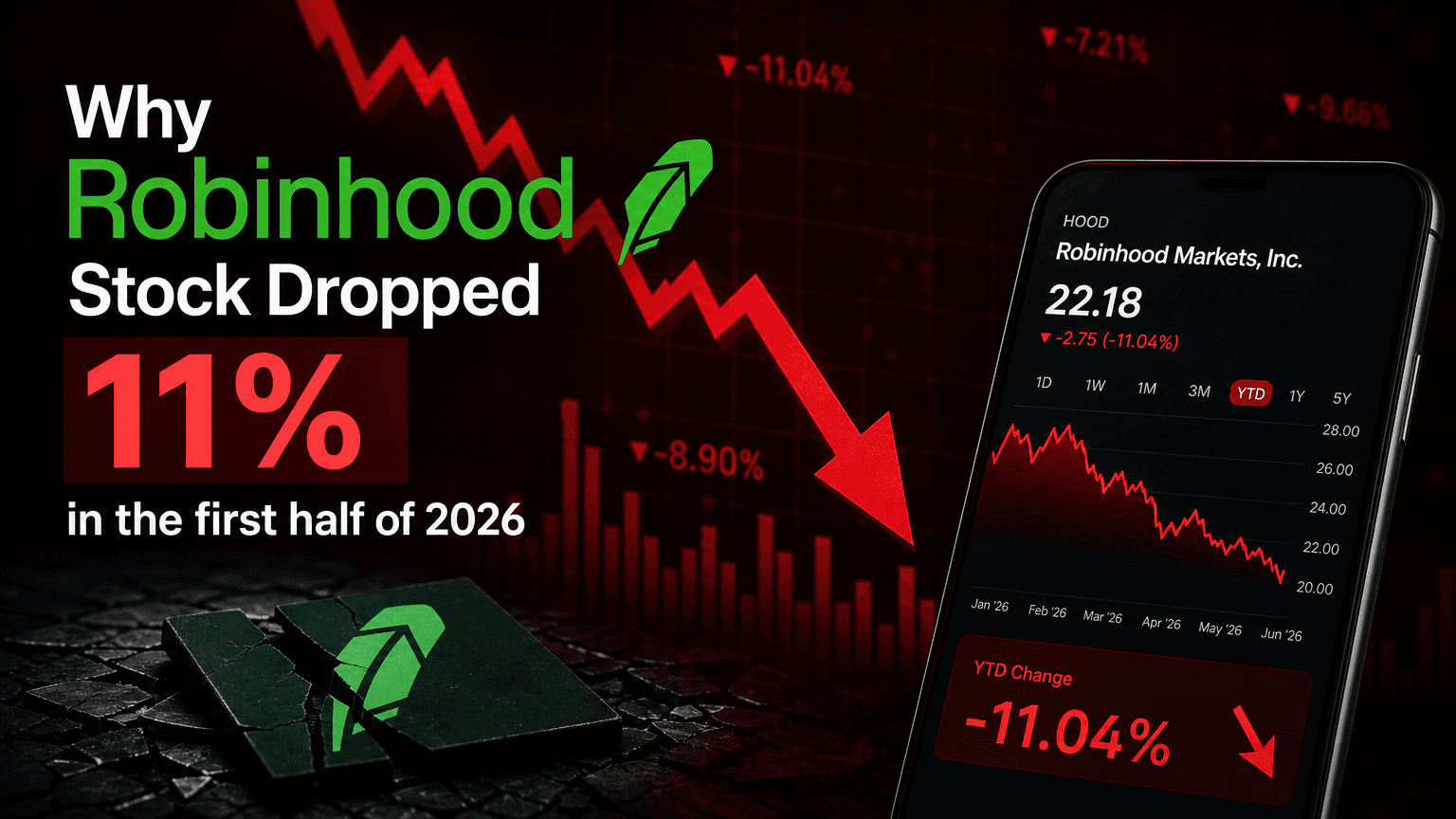
Why Robinhood Stock Dropped 11% in the first half of 2026

Robinhood Markets: Navigating the Financial Currents
Robinhood Markets (HOOD) has been on a rollercoaster ride in 2023, experiencing an 11% decline in the first half of the year before climbing back up by 3.75% in recent times. This fluctuation has mirrored the oscillations in the price of Bitcoin, a major asset traded on its platform. However, Robinhood's story is richer than just its cryptocurrency trading segment. It reflects a broader ambition to reshape the trading landscape with innovative financial offerings.
Beyond Cryptocurrency: Diversifying the Revenue Stream
While Robinhood is still relatively small in the financial universe with a trailing 12-month revenue of $4.6 billion, it's been a disruption force in the market due to its introduction of fee-free trades. This innovation has since become a standard across trading platforms globally. Yet, the company's heavy reliance on cryptocurrency trading highlighted vulnerabilities as Bitcoin prices plummeted, impacting Robinhood's growth figures.
Despite facing pressure, Robinhood continues to innovate. The company is expanding its offerings beyond cryptocurrency, with promising ventures in sectors like Prediction Markets, albeit some skepticism regarding their riskiness. Moreover, Robinhood's expanding role, such as being selected for retail involvement in SpaceX's IPO and gaining approval to underwrite IPOs, marks significant milestones in its evolving market presence.
Expanding Traditional Financial Services
To mitigate the volatility of cryptocurrency markets, Robinhood is branching into more stable financial services. The introduction of credit cards and bank accounts signifies a strategic pivot to consolidate its status as a formidable financial services player. These traditional services augment stability in Robinhood's offerings, complementing its high-risk, high-reward segments like cryptocurrency.
Despite tepid revenue growth - marked by a mere 15% year-over-year increase in Q1 2026 versus a massive 50% in the previous year - Robinhood's strategic diversification reflects positive undercurrents. A significant reduction of 47% in cryptocurrency trading revenue stands in contrast to a 46% surge in equities trading revenue, showcasing adaptive resilience.
Platform Growth and Investor Sentiment
Robinhood's broadening horizons are evidenced by a 39% increase in platform assets and a substantial 36% increase in Robinhood Gold membership, tallying up to 4.3 million subscribers. Further to this, the addition of half a million funded accounts and a fivefold increase in Robinhood banking illustrate a robust growth trajectory.
Reassessing Valuation: A Case for the Risk-Tolerant Investor
The initial 11% decline in the first half of the year is overshadowed by a strong 45% recovery over three months, driven by investor confidence in Robinhood's new directions and potential. Previously priced for perfection, the current P/E ratio of 55 and a price-to-sales ratio of 22 indicate a return to premium valuation.
For risk-tolerant investors with a long-term view, Robinhood presents an intriguing investment opportunity. While its premium valuation may pose susceptibility to future dips, the company's strategic diversification and innovation capabilities suggest potential for substantive returns. As Robinhood steadies its financial ship amid market storms, it remains a compelling narrative of fintech evolution and market adaptation.