3 min
13 Jul 26
Bitcoin holds above $63,000 as Iran tensions rise, BIP-110 debate intensifies
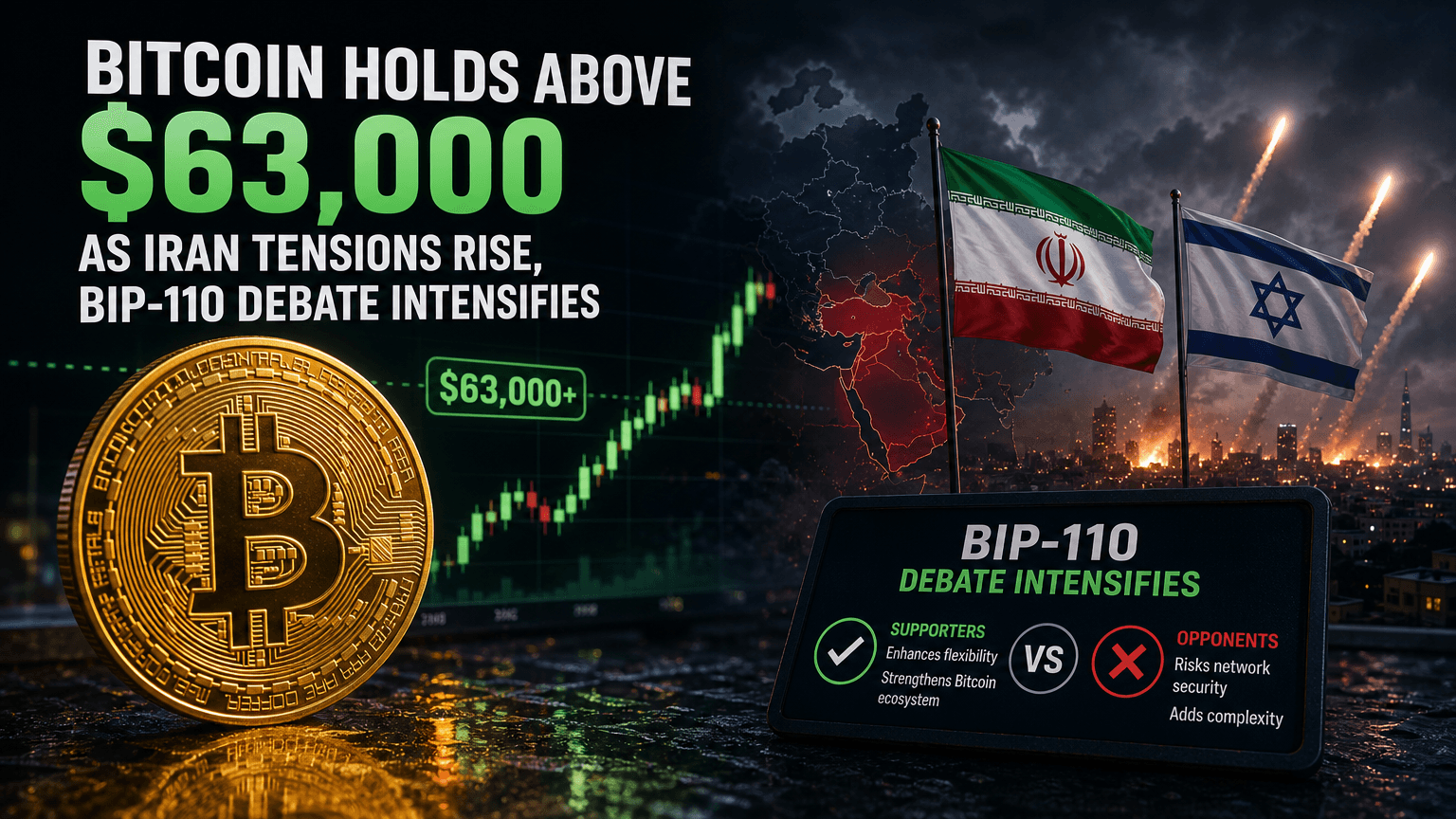

Bitcoin's Resilience Amidst Geopolitical Tensions
Over the recent weekend, Bitcoin managed to maintain its position above the $63,000 threshold, displaying remarkable resilience despite recent geopolitical tensions and ongoing discussions surrounding blockchain governance and digital asset regulation in the United States.
Trading slightly down by 0.42% at $63,984.1 as of 04:56 ET, Bitcoin's stability is noteworthy in the context of escalating Middle Eastern conflicts, particularly after the U.S. conducted a third wave of military strikes on Iranian targets, which prompted Tehran to temporarily close the critical Strait of Hormuz.
Bitcoin: A Haven Amidst Uncertainty
Remarkably, despite the potential disruptions to global energy markets posed by these heightened geopolitical tensions, the cryptocurrency market, led by Bitcoin, did not exhibit the characteristic panic seen in traditional financial counterparts. This resilience can be attributed to Bitcoin's status as a liquid asset always available for trading, even when traditional markets are closed, making it a key barometer for assessing geopolitical developments over the weekend.
Investors are now vigilantly observing the reopening of oil markets to ascertain whether the latest Middle Eastern tensions will translate into changes in crude oil prices, which often signal the economic ramifications of such conflicts.
Turning Toward Regulatory Developments in the U.S.
As the geopolitical environment remains tense, focus also sharpens on regulatory progress in the United States. Senator Cynthia Lummis has been vocal in urging Congress to advance the CLARITY Act, an actionable step aimed at establishing a definitive regulatory framework for digital assets before 2030.
The CLARITY Act, having already passed the House, seeks to delineate oversight duties between the Securities and Exchange Commission (SEC) and the Commodity Futures Trading Commission (CFTC), a crucial step in fostering a more stable and transparent cryptocurrency regulatory environment.
Debates Over Bitcoin's Blockchain Governance
Parallel to regulatory movements, the Bitcoin developer community is embroiled in a debate over BIP-110, a proposal intended to temporarily curtail non-financial data—often referred to as "spam"—from being stored on Bitcoin’s blockchain. Despite the deadline looming in early August, the proposal hasn't attracted significant backing from major mining pools, with support remaining below the critical 1% threshold required for activation.
Industry leaders, including Michael Saylor and Adam Back, have voiced concerns that modifying Bitcoin's consensus rules might introduce more significant long-term risks than addressing the current problem it purports to solve. Current indicators suggest BIP-110 lacks the necessary momentum to activate.
International Developments: Singapore's Anti-Fraud Measures
On an international front, Singapore has showcased effective synergy between regulatory authorities and the cryptocurrency sector through a six-week operation aimed at scam prevention. Featuring collaboration between local police and seven cryptocurrency exchanges, including Coinbase, the operation successfully thwarted over $4.2 million in potential scam losses.
Employing sophisticated blockchain analytics, authorities were able to preemptively identify upwards of 145 potential victims, illustrating the growing efficacy of public-private partnerships in bolstering trust and security within the digital asset sphere.
In conclusion, Bitcoin's performance and the broader cryptocurrency landscape serve as a testament to the adaptive nature and increasing maturity of digital assets amid global uncertainties and evolving regulatory frameworks. As these developments unfold, they underscore the crucial interplay between technological innovation, regulatory clarity, and geopolitical stability in shaping the future of the financial markets.