6 min
22 Jun 26
Microsoft Discovers STONEDRIVE: USB Crypto Stealer Evades Detection via Tor
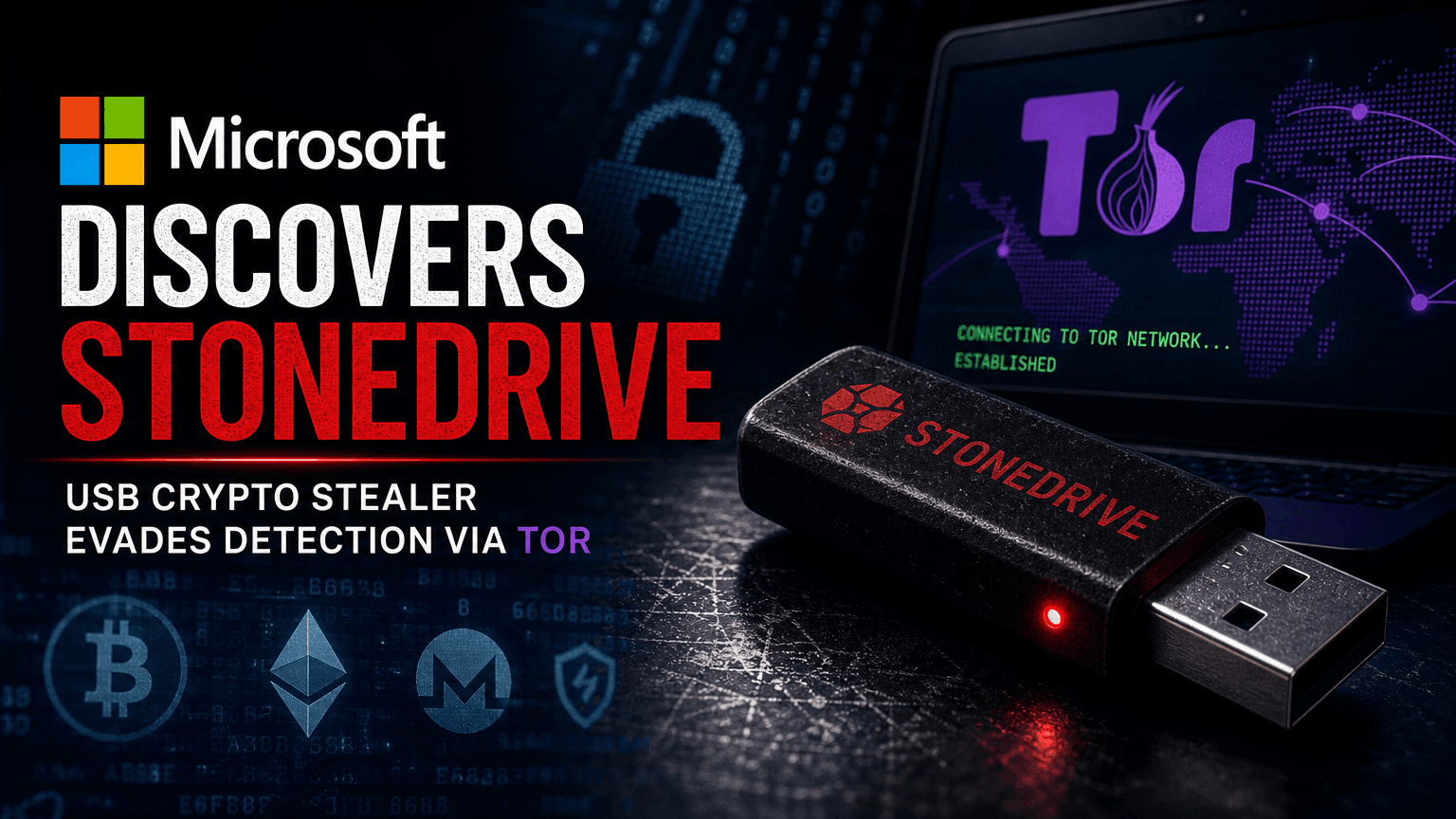

Microsoft Discovers Advanced Cryptocurrency Stealer Malware
In a growing concern for digital asset holders, Microsoft has recently unveiled a sophisticated cryptocurrency stealer malware, known internally as STONEDRIVE, which propagates primarily through infected USB drives. The malware cleverly combines old-school propagation techniques with modern evasion strategies, utilizing the Tor network for secure command and control communications. This development was highlighted in a recent detailed analysis by Microsoft's security researchers, underscoring the persistent evolution of threats targeting valuable digital assets.
Revival of Classic USB Worm Propagation
The STONEDRIVE malware revives the classic USB worm propagation method, widely recognized from threats like Conficker over a decade ago. Unlike many traditional malware strains that rely on email attachments or drive-by downloads, STONEDRIVE copies itself onto any removable media inserted into an infected machine. As the infected USB moves between computers, the autorun.inf file and associated executables automatically trigger infection on new systems. This is particularly effective where autorun features are enabled or users inadvertently interact with disguised folders.
Targeting Cryptocurrency Wallets and Sensitive Data
Upon infiltrating a system, STONEDRIVE operates like a typical information stealer by scanning for cryptocurrency wallet files, browser extension data, and stored credentials. It specifically seeks popular wallet applications like Electrum, Exodus, and MetaMask, and files associated with hardware wallet management software. Alongside these, the malware retrieves browser cookies, saved passwords, and autofill data containing potential seed phrases or private keys. This harvested information is then sent to attackers via Tor hidden services, complicating direct attribution and takedown efforts.
Advanced Evasion Techniques and Obfuscation
Microsoft's researchers highlight the malware's intricate layers of obfuscation, which are key to its evasion capabilities. Starting with an initial dropper, multiple stages of encrypted payloads decode sequentially, only after checking for analysis environments. Virtual machines and sandbox tools commonly trigger anti-analysis routines, prompting STONEDRIVE to either remain dormant or self-delete. This robust focus on evasion explains the campaign's ability to operate under the radar for months before wider security team detection.
The Role of USB-Based Spreading in Targeting Isolated Networks
The decision to utilize USB-based spreading suggests intent to target environments with air-gapped systems or strict internet controls. Such scenarios are often found in corporate settings, research facilities, and certain cryptocurrency trading firms where isolated machines are used for signing transactions. By infecting USB drives, STONEDRIVE bridges isolated networks without needing direct internet access from these primary targets. The collected data then gets exfiltrated once the USB drive connects to an internet-enabled system, all facilitated through Tor for secure and anonymous communication.
Challenges Posed by Tor Network Utilization
The Tor network provides substantial advantages to the operators behind STONEDRIVE. Tor's onion routing conceals the real locations of command-and-control servers while encrypting the malware's traffic, challenging many standard security tools. The malware employs hardcoded Tor addresses instead of domain names, bypassing DNS resolution alerts. Additionally, communication occurs at predefined intervals, limiting the discernible network footprint and complicating behavioral detection efforts.
Scope of Stolen Data and Potential for Broader Intelligence Gathering
Microsoft's analysis of stolen data reveals structured JSON payloads containing wallet addresses, private keys (when accessible), and screenshots from infected devices. Notably, the malware can activate microphones and webcams under certain conditions, hinting at possible additional intelligence gathering beyond financial theft. Variants also include keylogging and clipboard monitoring capabilities, the latter facilitating a common clipboard hijacking technique where copied cryptocurrency addresses are swapped with attacker-controlled alternatives during transactions.
Mitigating and Responding to the STONEDRIVE Threat
In response to the threat, Microsoft has coordinated with law enforcement and disseminated indicators of compromise through its Threat Intelligence Center. The company recommends disabling autorun features on Windows systems and implementing group policies to prevent executable files from running automatically on USB drives. Regular employee training on USB safety, especially concerning unknown devices, is crucial in sectors handling significant digital assets.
Attribution and Scope of the Cybercriminal Group
Initial findings suggest a financially motivated group, rather than state-sponsored entities, is responsible for the STONEDRIVE campaign. Their infrastructure and targeting patterns predominantly affect English-speaking regions with high cryptocurrency adoption, such as North America, Western Europe, and Southeast Asia. However, the USB propagation method poses a universal risk for any organization where travel or media sharing is prevalent.
Recommendations for Enhanced Security Measures
Endpoint detection and response tools can identify STONEDRIVE through particular behaviors, such as unusual processes that access wallet files quickly or unexpected Tor client activity from non-browser processes. Microsoft advises enabling Windows Defender's tamper protection and ensuring systems are up-to-date with security patches to counter exploitation of older vulnerabilities potentially used by the malware.
Implications for Cryptocurrency Management and Security
The STONEDRIVE threat underscores ongoing tensions between user convenience and cryptocurrency security. Many users opt to keep wallet files accessible rather than securely stored, inadvertently opening doors for malware attacks. While hardware wallets offer superior security, their software interfaces can still be targeted by sophisticated malware. Security experts recommend caution with any USB device, advocating that they be scanned on dedicated, isolated machines before connecting to operational systems.
Examining Supply Chain Risks in the Cryptocurrency Sector
The larger implications of the STONEDRIVE campaign illuminate potential supply chain vulnerabilities in the cryptocurrency realm. Developers receiving infected USB drives from external sources risk spreading malware within development environments. In such scenarios, the compromise of signing keys or seed phrases could lead to severe financial repercussions. As a result, some blockchain projects are revisiting their USB usage protocols following Microsoft's alert.
Future Projections and Continued Vigilance
Researchers continue to monitor for new STONEDRIVE variants as the operators likely adapt in response to increased scrutiny. The malware's modular design permits straightforward updates, incorporating new evasion strategies and targets without necessitating complete codebase overhauls. Future iterations may include ransomware functionalities or integration with botnets for expanded distribution.
Conclusion: Balancing Historical Insight with Modern Security Practices
The STONEDRIVE campaign exemplifies how past infection tactics can maintain relevance amidst evolving digital landscapes. Despite being an older threat vector, USB remains a trusted data transfer method that attackers leverage effectively. The blend of physical media propagation with modern network protocols presents a challenging threat that intertwines low-tech and high-tech components.
Security teams must revise detection protocols and enhance user education on perceived outdated risks. The STONEDRIVE operation serves as a stark reminder that cybercriminals study historical successes, reapplying those strategies against modern targets. Vigilance across digital and physical mediums is imperative for safeguarding valuable digital assets against compromise, especially as blockchain technology gains traction in mainstream financial and supply chain operations. Through concerted efforts in research and intelligence sharing, the cybersecurity community can work to disrupt such campaigns before they inflict extensive harm on the burgeoning digital economy.