4 min
12 Jun 26
Spain's Cecabank launches MiCA-regulated crypto custody platform
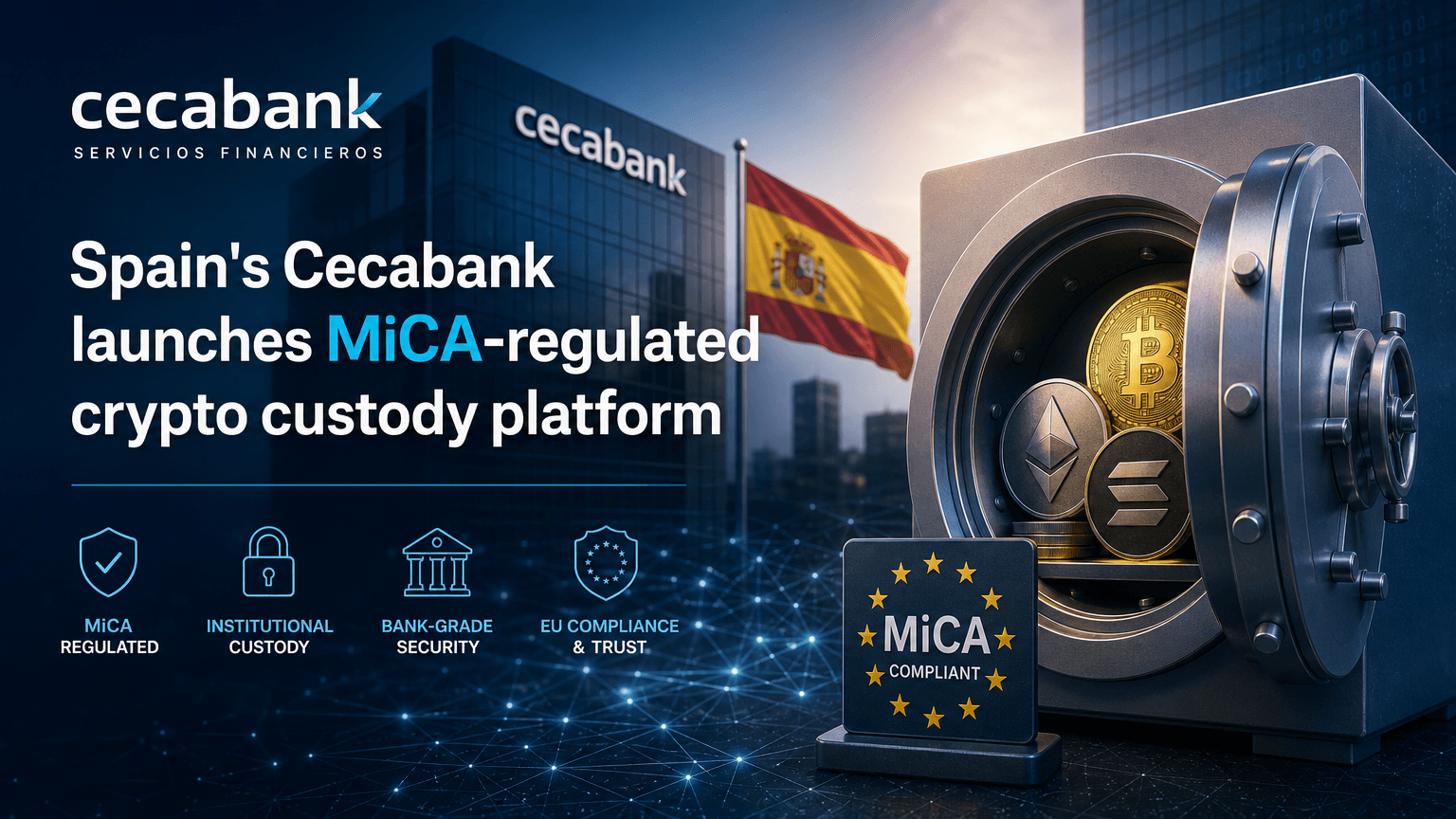

Introduction: Cecabank's Foray into Cryptocurrency Custody and Trading
Cecabank, a prominent Spanish banking group, has ventured into the rapidly evolving world of digital assets by launching a regulated cryptocurrency custody and trading infrastructure tailored for financial institutions. This move is part of an effort to extend its crypto-asset services under the European Union's new Markets in Crypto-Assets (MiCA) framework. In doing so, Cecabank has brought Renta 4 Banco onto its innovative platform, setting the stage for a new era of regulated crypto services for banking institutions.
The Road to MiCA-Ready Crypto Services
In June, Cecabank made headlines with its announcement that it had moved its crypto-asset service project into production, having secured the necessary authorization to provide custody, transfer, and reception and transmission of orders (RTO) of crypto-assets. The rollout marks the culmination of plans revealed a year prior, in collaboration with crypto exchange Bit2Me, to develop a MiCA-ready platform for financial institutions – a project that was awaiting regulatory approval at the time.
Strategic Partnership and Technological Infrastructure
The partnership between Cecabank and Bit2Me, established in May 2024, plays a crucial role in the project's success. The arrangement capitalizes on Cecabank's expertise in securities services and regulatory compliance while leveraging Bit2Me's cutting-edge digital asset technology. This synergy allows financial institutions to seamlessly integrate cryptocurrency services within an operational framework that aligns with regulatory requirements.
Expanding Crypto Services with MiCA Approval
Regulatory approvals have been pivotal in the deployment of Cecabank's crypto services. The bank's crypto-asset license enables it to provide key services such as custody, transfers, and RTO, essential for operating under the European Union's MiCA regulation. Having obtained MiCA authorization from Spain's securities authority, CNMV, in July 2025, Cecabank is also registered as a crypto-asset service provider with the Bank of Spain.
Cross-Border Expansion Plans
With regulatory infrastructure in place, Cecabank has launched the European passporting process to broaden its crypto services into Ireland, Portugal, and Luxembourg. Initially, the focus will be on major cryptocurrencies and stablecoins that adhere to European regulatory standards, signaling a commitment to safety and compliance in the digital asset landscape.
Leadership Perspectives on Crypto Service Integration
Aurora Cuadros, Cecabank’s Corporate Director of Securities Services, emphasized the bank’s strategic alignment of traditional custody services with digital asset management. "At Cecabank, we are taking a natural step by transferring our experience and our standards to the world of digital assets," Cuadros stated, articulating the seamless transition and integration of cryptocurrency services into Renta 4 Banco’s offerings.
For Bit2Me, this initiative is viewed as a breakthrough in integrating digital assets within traditional banking systems. Gabriel Ayala, Director of Banking Solutions at Bit2Me, celebrated the launch as a significant milestone that consolidates their model of institutional-grade crypto infrastructure within conventional banking operations under the MiCA framework.
A Broader Movement in Spain's Banking Sector
Spain's banking sector is witnessing a broader enthusiasm for crypto services. As previously reported in the industry, major financial entities like BBVA have expressed interest in offering Bitcoin and Ethereum trading and custody services, utilizing internal infrastructure. This trend underscores a growing recognition of the importance of integrating digital assets into the mainstream financial ecosystem, paving the way for more comprehensive crypto offerings across traditional financial institutions.
Conclusion: A New Era for Crypto in Banking
Cecabank's initiative exemplifies the transformative potential of cryptocurrency integration within traditional banking systems. By establishing a robust, regulated framework for managing digital assets, the bank not only empowers financial institutions to offer cutting-edge services but also sets a precedent for compliance and innovation in the burgeoning crypto market. As the landscape continues to evolve, the intersection of regulatory frameworks and digital currency technology promises to redefine the future of finance.